USN · IC · 44 Years of Listening

Special
Signals

A museum for silent listeners. Beautiful and fascinating vintage receivers spanning a century of American life — each one a window into the moment it was made, and the voices it carried...

44 years listening for signals that mattered. Now listening for the ones that endure.

The Collection Other Gear Essential Library Operations Morse Trainer Cold War Echoes Merchandise
Collecting About the Collector

This site works best in Chrome or Microsoft Edge on desktop or tablet-sized screens.

Beyond the Receivers

Not every piece in the collection is a radio. Other interesting gear includes vintage speakers, a vacuum tube tester, a Morse trainer (and my ear is still pretty good!), a multimode signal processor, etc. More to follow in this section.
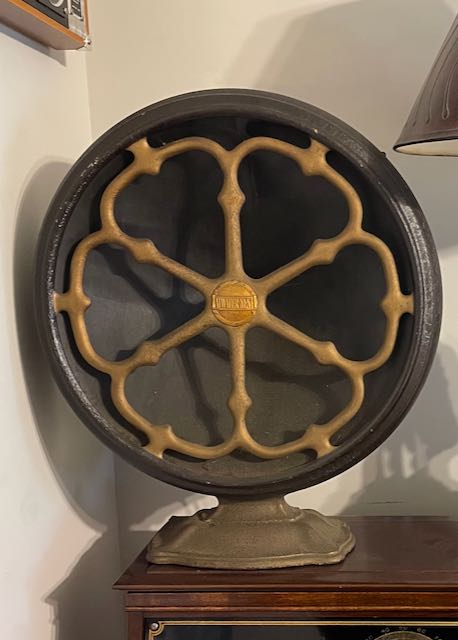
Atwater Kent Model E Speaker
c. 1925
Horn / Cone Speaker · Atwater Kent Manufacturing Co., Philadelphia PA

The Model E is one of Atwater Kent's early external speakers — a large-format cone driver in a cast iron open-back frame with an ornate Gothic quatrefoil grille in bronze. The cast iron base is period-correct, and the whole assembly has the heft and presence of something built to last a century. It has.

In the mid-1920s, radio receivers had no built-in speakers — audio came out of a headphone jack, and if you wanted to fill a room, you attached an external horn or cone speaker. The Model E represents that era exactly: a time when the radio itself was a technical marvel and its speaker was a piece of furniture. This one dominates any room it occupies, which is entirely appropriate for a piece of equipment that was meant to announce the arrival of broadcasting to an astonished public.
Cast Iron Frame Gothic Quatrefoil Grille c. 1925 RadioMuseum ↗
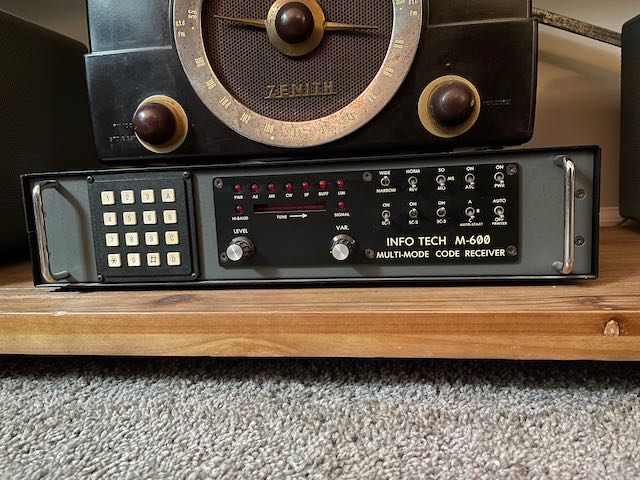
Info Tech M-600 Decoder
Info Tech M-600
c. 1985
RTTY / Multi-Mode Digital Decoder

The M-600 is a standalone hardware decoder that processes non-voice signals — Morse, Baudot RTTY, ASCII, and TOR — and outputs decoded text to a video monitor and/or printer. It connects to the audio output of any communications receiver. No computer required; the intelligence is entirely in the box.

Decodes Baudot RTTY at 45–132 WPM, ASCII at 75–1200 Baud, TOR (ARQ and FEC), and Morse from 5 to 120 WPM with auto-ranging. Features a 10-step LED bar graph for tuning, bit-inversion scanning across all 32 possible combinations, and a sel-cal selective calling system. The screen-print feature allows the operator to capture anything currently on the video display directly to the printer — a paper saver, and a handy way to pull hard copy after the fact.

I used equipment like this during my time in the Navy — the M-600 is a less versatile version of the M-8000, which I did some pretty good work with. It takes audio out of the receiver and does that little black box magic to turn those beeps and squeaks into actionable intelligence on a good day. These decoders are not classified, and can be found fairly often. I found this one on Goodwill.com. You'd use something like this to process the teletype FSK signals that send the feeds you see in Operations — a fitting role for a piece of gear that spent its life turning signals into useable content.
Morse · Baudot · ASCII · TOR-ARQ · TOR-FEC Bit Inversion Decoding Video + Printer Output Rack Mountable User Manual ↗
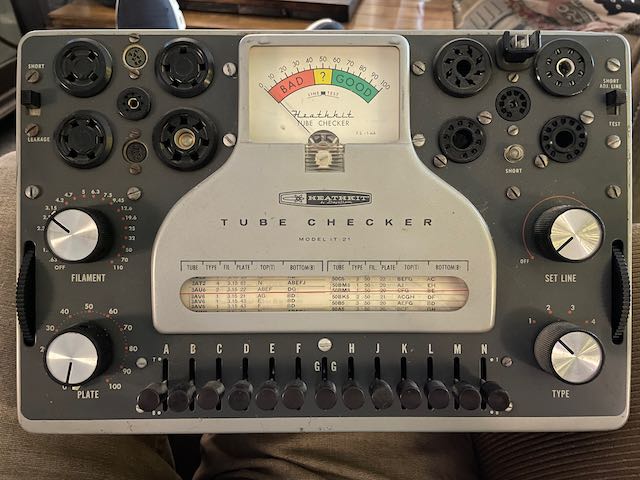
Heathkit IT-21 Tube Checker
c. 1965
Vacuum Tube Tester

Any radio collector worth their salt has at least one tube checker, and the IT-21 is a fine one to have. The BAD/GOOD meter with its color arc tells you immediately what you need to know — no ambiguity, no guesswork. Filament, plate, leakage, emission: the IT-21 covers the essentials with the characteristic Heathkit thoroughness.

An eBay acquisition, and worth every penny. Before powering up any restoration project, the tube checker gets consulted first. It has likely saved more tubes from the trash — and more radios from silence — than any other tool on the bench.

Emission Testing Leakage Testing Filament Check BAD / GOOD Meter User Manual ↗
AN/GSC-T1 Morse Training Set
c. 1950s
Military Morse Code Training Equipment

Found in the corner of a garage at an estate sale in North Augusta, SC — the radios on offer that day turned out to be junk, but this was not. Heavy, olive drab, and unmistakably military. The AN/GSC-T1 is a self-contained Morse code training system: multiple keysets, audio output, and a flashing light output for silent practice. Built to work in any theater, under just about any conditions. It still does.

There is a particular satisfaction in owning this one. As a Navy signals operator I copied Morse code at a high degree of proficiency throughout my career. As a Navy Tech School instructor, I taught it. This machine trained the hands that sent the messages that mattered. Finding it in a garage while looking for something else entirely felt like it was supposed to happen.
Multiple Keysets Audio Output Light Output Military Issue Fully Operational User Manual ↗
Hallicrafters R-42 Reproducer
c. 1940
External Speaker / Reproducer

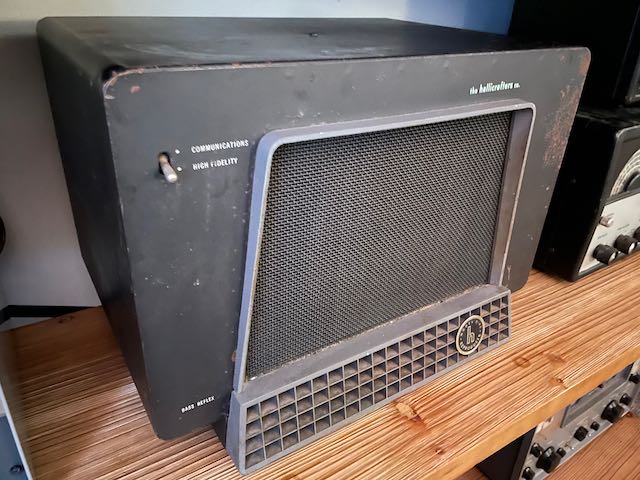
Not a radio — a speaker, and a good one. The R-42 was Hallicrafters' matching external reproducer, designed to pair with their communications receivers and give the audio the room it deserved. It works with any receiver, but it's the Hallicrafters name on the cabinet that makes it something special — the same olive-and-black metal finish, the same no-nonsense construction, the same sense that it was built to be used.

Found at the Stone Mountain Hamfest. It pairs naturally with the rest of the Hallicrafters stable, and in a signals room setup it completes the picture: receiver on the desk, reproducer alongside, headphones on the hook. Everything in its place.
External Speaker Hallicrafters Match Metal Cabinet Stone Mountain Hamfest
Hammarlund S-200 Speaker
c. 1957
External Communications Speaker · Hammarlund Manufacturing Co., New York NY

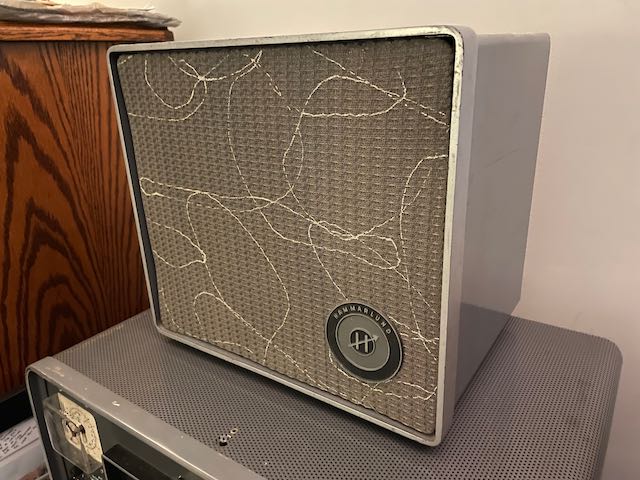
The S-200 was Hammarlund's matching external speaker for their HQ-series communications receivers — the HQ-110, HQ-170A, and HQ-180A all in this collection. The grey two-tone cabinet with its woven grille cloth and period badge is a direct visual echo of the receivers it was designed to sit atop, turning a functional accessory into a considered piece of industrial design.

A well-chosen external speaker makes a genuine difference in communications reception — pulling audio out of the receiver chassis and into a proper enclosure changes the character of the sound entirely. The S-200 does exactly that.
External Speaker HQ-Series Match Hammertone Cabinet RadioMuseum ↗
National NC-2TS Speaker
c. 1936
External Communications Speaker · National Company, Malden MA

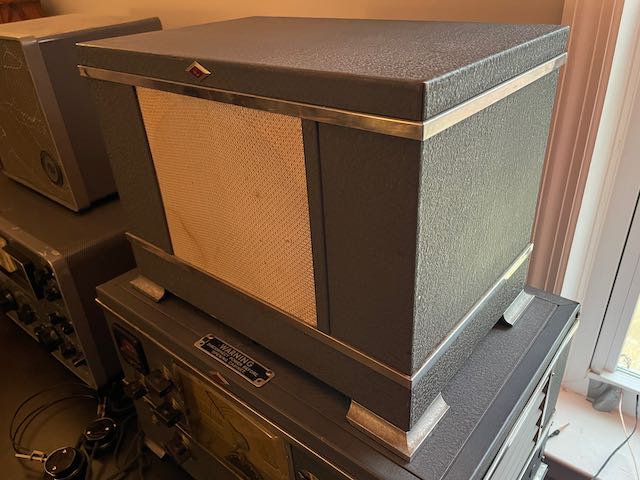
The NC-2TS is the factory-matched external speaker for the National NC-2-40D receiver — same charcoal hammertone finish, same chrome trim strips, same rubber feet, same cabinet proportions. National built the NC-2TS to be the NC-2-40D's companion, and together they form a matched set that looks as deliberate as it sounds.

Finding a matching speaker for a pre-war receiver is considerably harder than finding the receiver itself. The NC-2TS is a rare piece, and having it paired with the NC-2-40D here completes one of the collection's most historically significant stations.
External Speaker NC-2-40D Match Pre-War RadioMuseum ↗
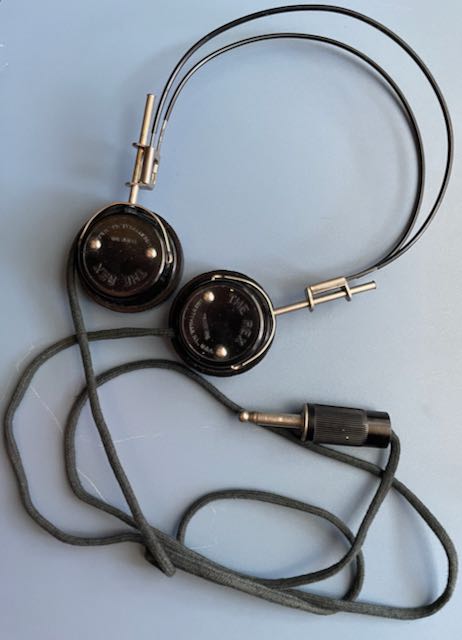
The Rex Operator Headphones by Trimm
"The Rex" Operator Headphones
c. 1930s–40s
High-Impedance Operator Headset · Trimm Radio Mfg. Co., Chicago IL

This is a vintage, fully functioning "The Rex" operator headphones, produced by Trimm Radio Mfg. Co. (later Trimm Inc.) of Chicago, Illinois, during the early to mid-20th century. Designed for high-impedance applications like telephony and early ham radio, they feature circular Bakelite earpieces, a minimalist twin-wire adjustable headband, and a classic braided cloth cord terminating in a metal-tipped plug.

While similar in appearance to military-grade headsets from the same era, this specific model was a staple for commercial and civilian radio operators due to its sensitivity and durable construction. This headset was an "Easter egg" find inside the Montgomery Ward Airline desk radio (elsewhere on the site).
High Impedance Bakelite Earpieces Braided Cloth Cord Easter Egg Find

Essential Library

Every serious collector needs a serious library. These are the volumes that shaped how I understand the signals, the machines, and the history they carried.

Operations

An Ode to Operators

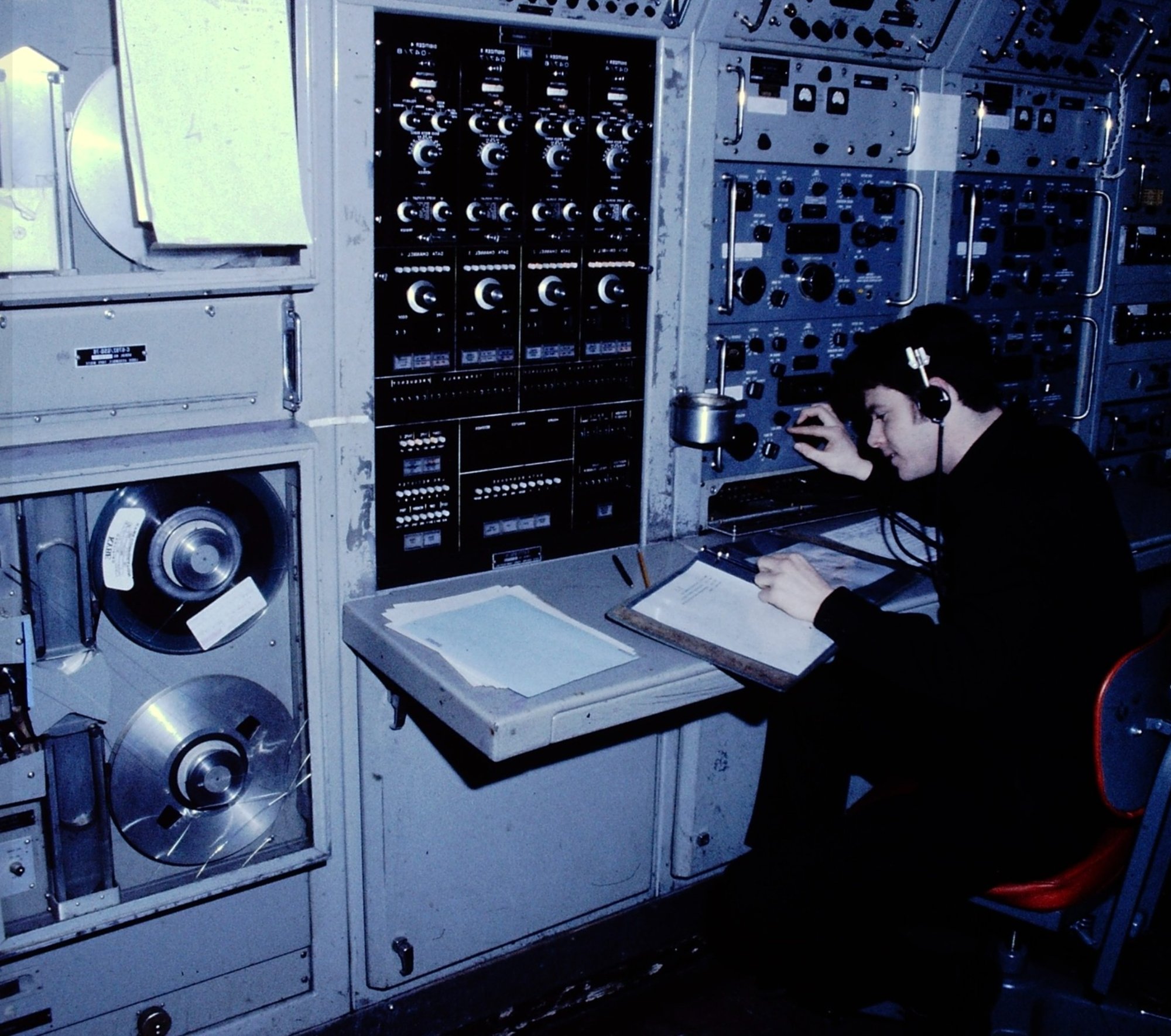
NSGA Edzell, April 1979

This photograph was taken at NSGA Edzell, Scotland, April 1979. Note the cracked glass on the recorder, the missing rack paint, the ashtray mounted where it was needed. An era long gone — TEBO is now a museum piece, Edzell is long shuttered, and the signals collected that night have faded into silence. The Op at the position, if he's still with us, is on Medicare.

You had to be there.. It's 0230Z, and you're wearing two sets of criss-crossed headphones, one set for each ear, plugged into two R-390 receivers so you can copy both ends of a comms link that is using frequency diversity. The sound of 40 teletype machines printing simultaneously is almost deafening. In the massive, dim room you see the glow of spectrum display units, o-scopes, cigarettes. The smell of warm vacuum tubes and the coffee pot the size of a trashcan is comforting, although your stomach burns from one cup too many of that tar the Chief insists you brew.

Morse blares out of one monitor speaker, Radio Luxembourg out of another. You'll get off watch at 0600Z, maybe a little earlier, if the 'mate relieving you gives you a break. Your crew covers their piece of the massive target, while sister sites cover theirs — a jigsaw of eternal vigilance, carefully tracking our adversaries on a plexiglass covered chart, updating the latest HFDF locations using a grease pen, a compass rose over each of the sister sites, used to draw lines-of-bearing from each — where the lines cross marks the target.

That "eternal vigilance" is pretty draining when the notorious 2/2/2/80 rotating shift is running you through the wringer. Watching encrypted gibberish printing ream after ream gets a bit tedious — broken by moments of real excitement when the targets start unexpected maneuvers — or conducting a field day to deep clean the facility (but not/not the coffee pot — never clean the coffee pot..), or the mid-shift interludes with the shipmates you work with, all volunteers in Service to the Nation. Talk about geopolitics, communications theory, great locales for leave, another dubious sea story, a practical joke pulled on an Op trying to stay awake. And you think to yourself, "Man, these are some sharp, sharp people. Glad they're on our side…"

In Operations you'll find examples of radioprinter signals. Turn on the teletype, select from the historic and live feed buttons, and observe the displays below. More comms samples to follow.

This site works best in Chrome or Microsoft Edge on desktop or tablet-sized screens. Live feeds require an internet connection. Download the standalone version below to practice offline.

Historic Telegrams
Live News (8 sec delay)
Sonograph · FSK 170 · Mark 2125 Hz · Space 2295 Hz · 45.45 Bd standby
Spectrum Display Unit Historic
Freq:
Mode: ITA2 / 50 Bd
Shift: 170 Hz
Mark: 2125 Hz
Space: 2295 Hz
S/N:
SDU · FSK Spectrum Analyser

Morse Trainer

Before there were satellites and fiber, before spread-spectrum and frequency hopping, there was Morse code. A skilled operator could pull a clean copy off a circuit that a machine couldn't touch — reading through QRM, QRN, weak signals, bad fists, and deliberate interference. That skill was earned, not issued. It was drilled into you until it was reflex.

The Navy trained Morse operators using a system that started with individual characters, moved to five-figure encrypted groups, and then put the trainee on live traffic — the same format they'd encounter on a real circuit. The trainer below follows that same progression. Four phases: characters, groups, live traffic, and a reference panel covering the prosigns, Q codes, and Z codes you'd hear on a military net.

Phase 3 connects to a live Wikipedia edit stream, BBC World News, and NAVTEX maritime weather — real traffic, sent in real Morse, at whatever speed and tone you set. The spectrum display above the keyboard responds to every dit and dah. Copy it on your mill or stick it with your trusty #2 lead-filled.

This site works best in Chrome or Microsoft Edge on desktop or tablet-sized screens. Live feeds require an internet connection. Download the standalone version below to practice offline.

// Take it with you // ⇓ Download Morse Trainer // Single file · No install · Chrome or Firefox //

Cold War Echoes

Numbers stations. Vocoder-scrambled voices. A broadcaster going off the air as tanks roll in. These are the signals that were never meant to be heard — or the ones heard by the wrong ears at exactly the wrong moment. Each recording below is a primary source document from the shadow frequencies of the Cold War.

Select a cut from the tape log, let the machine spool to position, and listen. The VU needle responds to the actual signal level. The reels turn at the correct angular velocity for the amount of tape remaining — physics included.

Works best in Chrome or Microsoft Edge on desktop. Load your own audio files in the downloadable standalone version below.

Merchandise

An Assortment of Procurable Interesting Items.

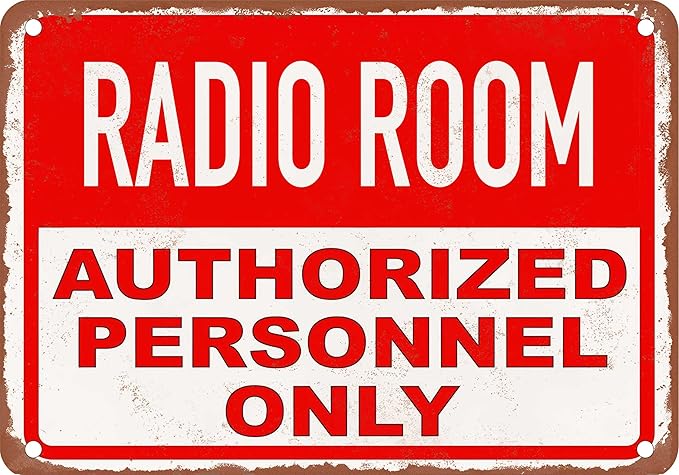
Radio Room Authorized Personnel Only Metal Sign
Radio Room — Authorized Personnel Only
The sign that hung on doors you weren't supposed to know existed. A reproduction of the kind of access-control signage found on naval vessels, shore stations, and signals facilities throughout the Cold War era — where what happened behind that door shaped history, and the fewer people who knew about it, the better.
Amazon
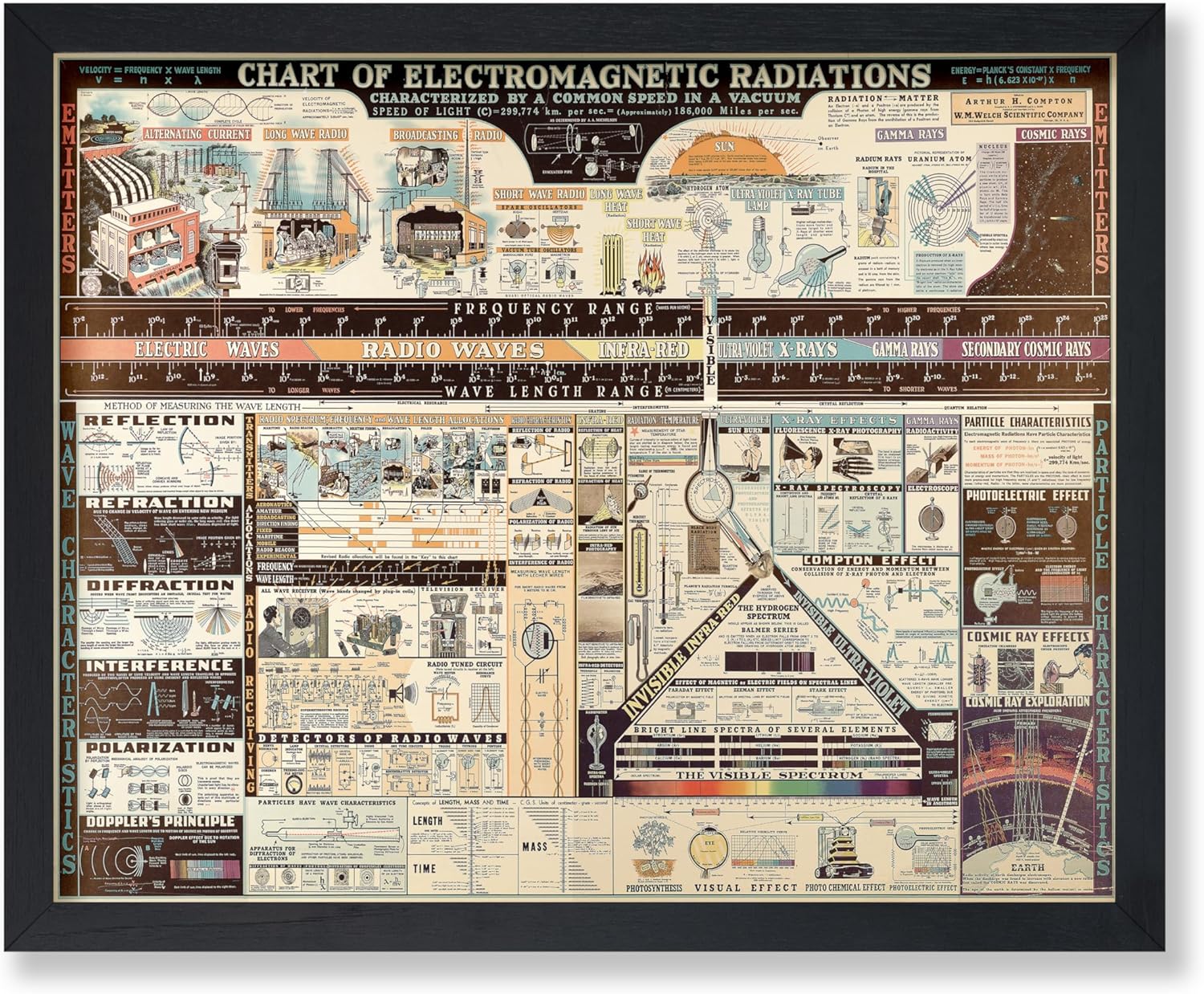
Vintage Chart of Electromagnetic Radiations Poster
Chart of Electromagnetic Radiations
Originally published by the W.M. Welch Scientific Company and associated with Nobel laureate Arthur H. Compton, this chart is one of the great didactic artifacts of early 20th-century science — mapping the entire electromagnetic spectrum from alternating current to cosmic rays in a single magnificent illustration. It hung in university physics labs and radio training rooms when the men who built the modern signals world were still learning their trade.
Amazon
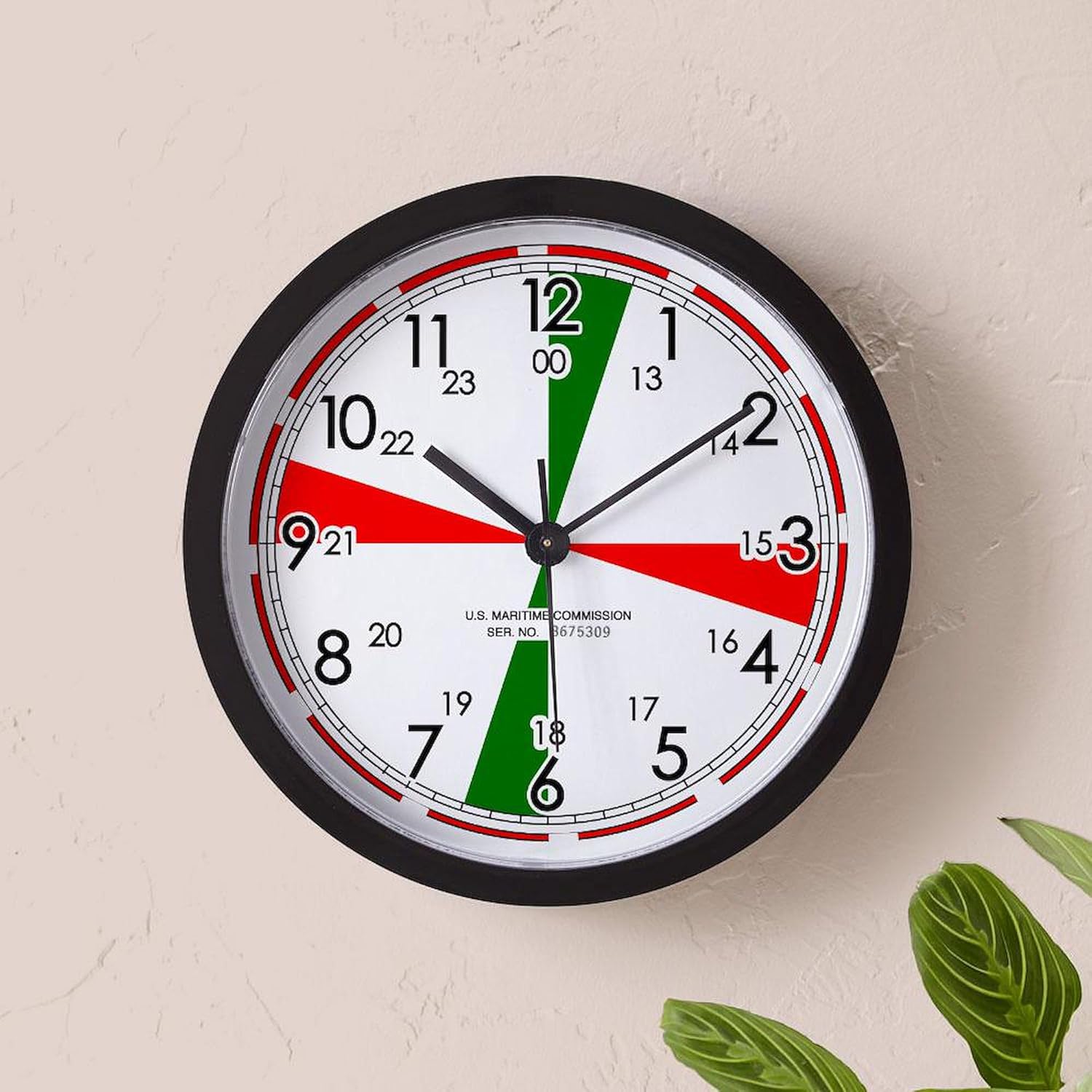
U.S. Maritime Commission Silence Period Clock Replica
U.S. Maritime Commission Silence Period Clock
The red wedges mark the silence periods — three minutes of every quarter-hour when all maritime radio traffic stopped and operators listened for distress signals on 500 kHz. Required by international treaty after the Titanic disaster, this clock governed the rhythms of shipboard radio operations for decades. Every radio operator who stood watch at sea knew exactly what those red wedges meant.
Amazon
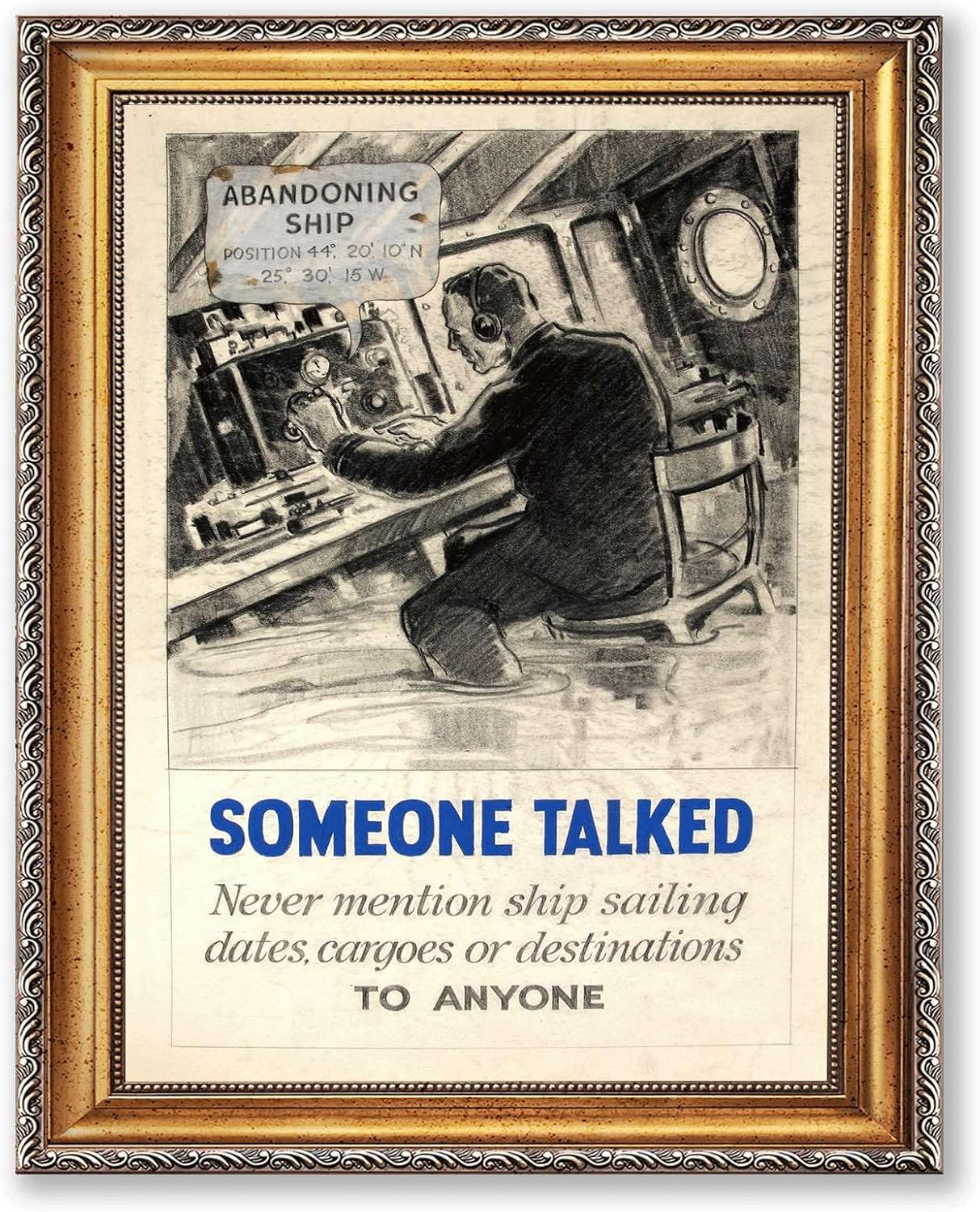
Someone Talked WWII Propaganda Poster
Someone Talked — WWII Propaganda Poster
The radio operator stays at his post as the ship goes down, water rising around his feet — because someone mentioned the sailing date to the wrong person. One of the most powerful of the WWII loose lips campaigns, this poster speaks directly to the signals community: the cost of careless talk is measured in ships, and in the men who go down with them.
Amazon
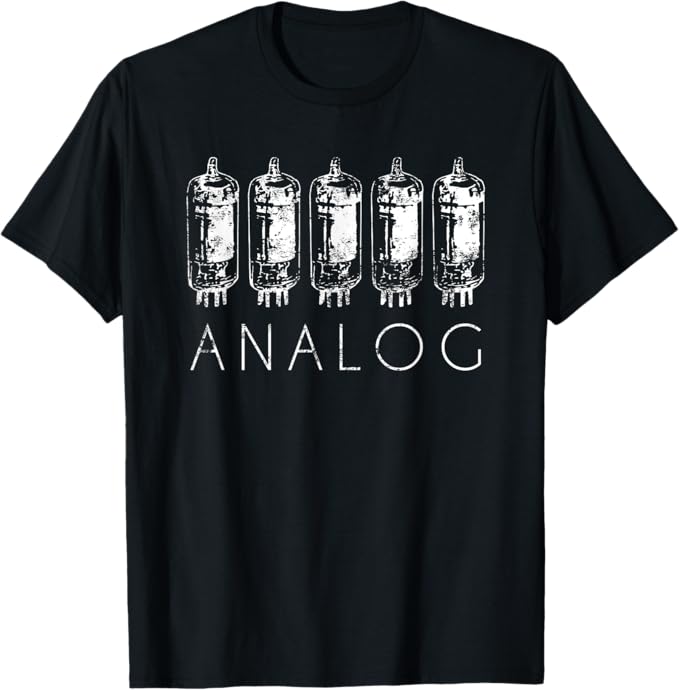
ANALOG Vacuum Tube T-Shirt
Five glass envelopes, a single word. No further explanation required — if you know, you know. Wear it to the hamfest and see who stops to talk.
Amazon
Cold War Europe Military Alliances Map Poster
Cold War Europe — Military Alliances Map
NATO blue to the west, Warsaw Pact red to the east, with the Iron Curtain running straight through the middle of Germany. This is the world these radios monitored — propaganda broadcasts, numbers transmissions to covert assets, Russian Long-Range Aviation carrying their payloads of nuclear death... a continent divided by ideology, watched constantly by signals operators on both sides of the line. The geography of forty years of tension, rendered in two colors.
Amazon
EP-3E Aries II SIGINT Aircraft Poster
EP-3E Aries II — Naval SIGINT Platform
The Navy's premier airborne signals intelligence collection platform, the EP-3E Aries II carried a crew of mission specialists and their equipment across the world's most sensitive airspace for decades. If you flew in one, worked with one, or spent a career listening to what they brought back — this one needs no caption.
Amazon
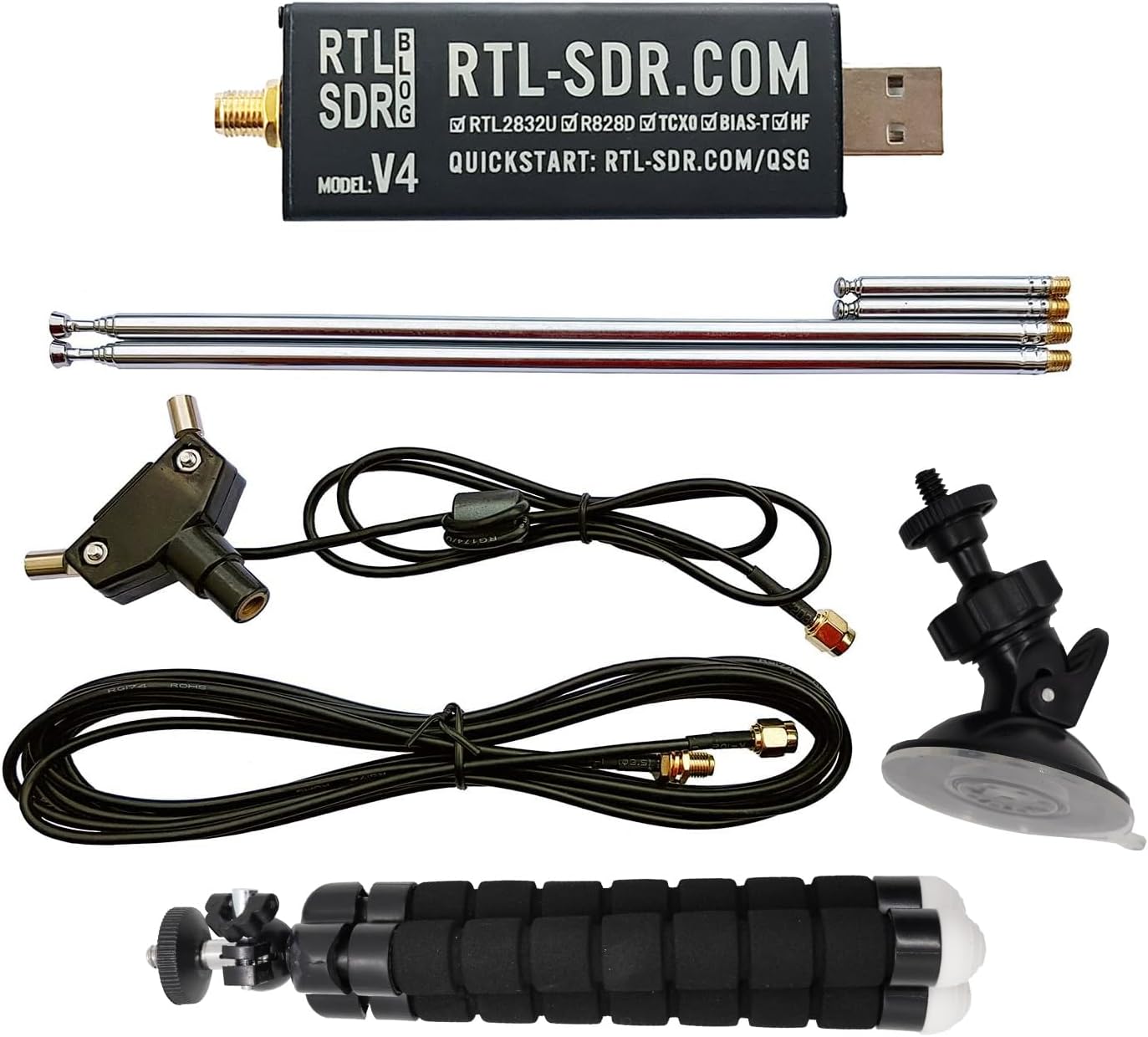
RTL-SDR Blog V4 Software Defined Radio Kit
RTL-SDR Blog V4 — Software Defined Radio Kit
The entry point for anyone who wants to hear what's actually in the air. The V4 improves on its predecessors with a direct-HF sampling path, temperature-compensated oscillator, and a dipole antenna kit that gets you on the air immediately. Plug it into a laptop running SDR++, and the entire spectrum opens up — aircraft transponders, weather satellites, maritime traffic, and signals you won't find documented anywhere. The modern equivalent of sitting down at a receiver for the first time.
Amazon
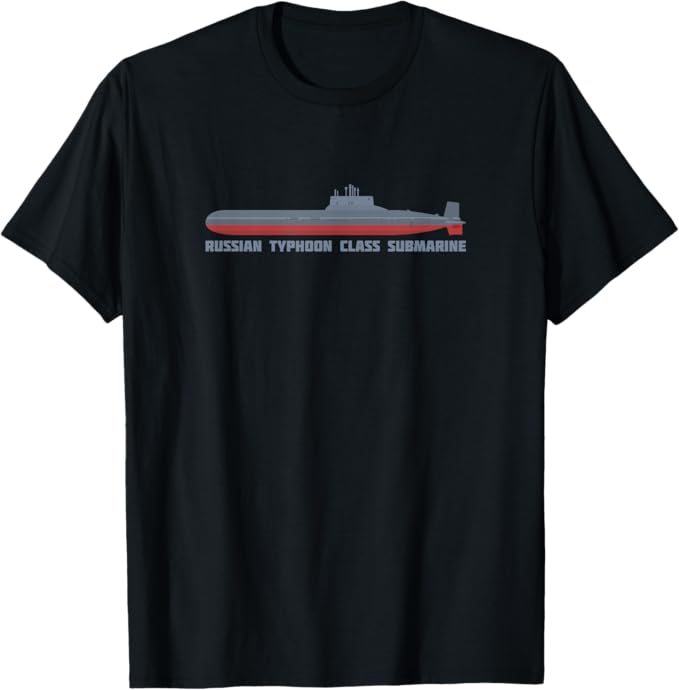
Russian Typhoon Class Submarine T-Shirt
The largest submarine ever built — displacing more than 48,000 tons submerged, carrying twenty SS-N-20 ballistic missiles, and crewed by 160 men who lived inside a vessel so large it had an indoor swimming pool and a sauna. The Typhoon was the Soviet answer to American deterrence: go bigger than imagination allows. Wear this and wait for someone to say "Hunt for Red October."
Amazon
Tupolev TU-95 Blueprint T-Shirt
Tupolev TU-95 — Strategic Bomber Blueprint T-Shirt
Still flying after seventy years, the TU-95 Bear remains one of the most distinctive aircraft ever built — four turboprops turning contra-rotating propellers loud enough to be tracked acoustically from submarine hydrophones. Generations of NATO intercept operators and fighter crews have escorted these aircraft along the periphery. If you spent time listening for Bears, or watching them on radar, this blueprint rendering is for you.
Amazon
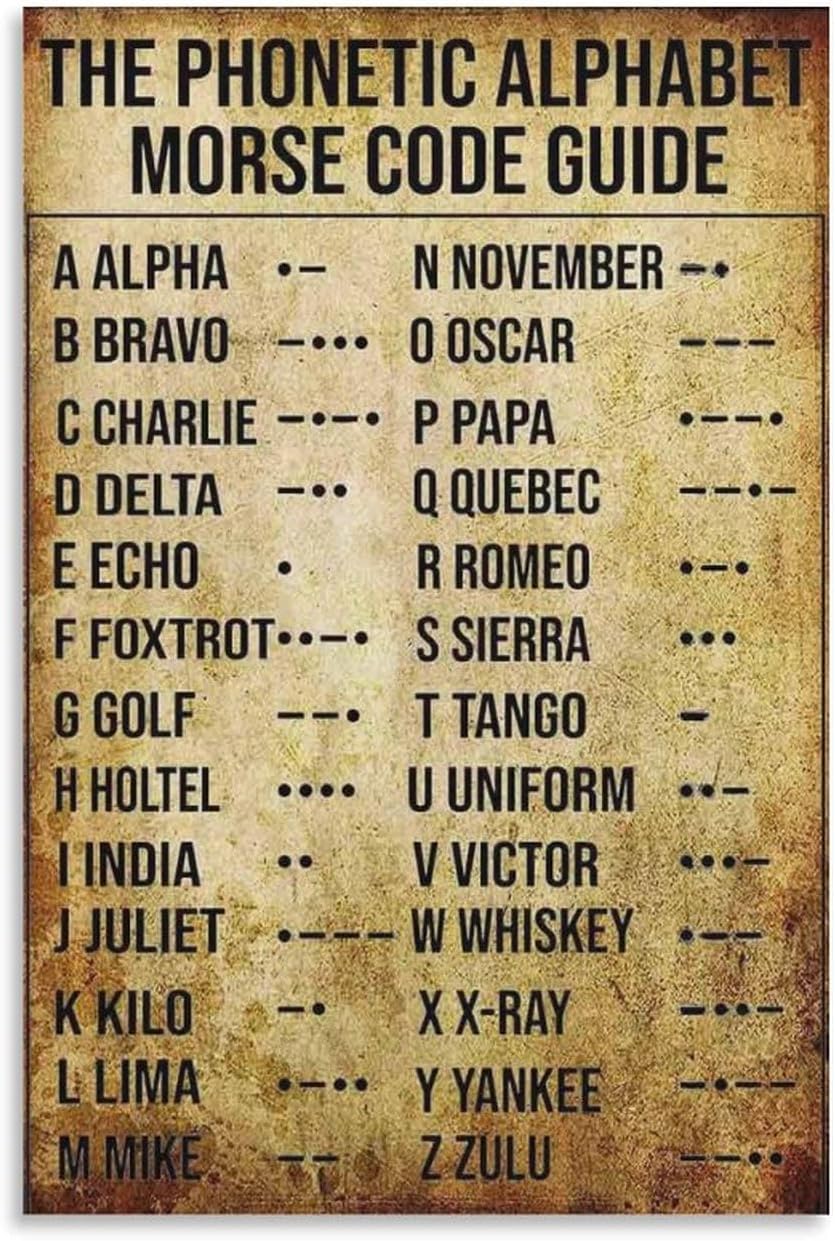
Phonetic Alphabet and Morse Code Guide Tin Sign
Phonetic Alphabet & Morse Code Guide — Tin Sign
Alpha through Zulu, dot-dash through dash-dot-dot — the two vocabularies that kept communications unambiguous under fire, static, and jamming for a century. This aged-parchment tin sign is exactly the kind of thing that belongs on the wall of a radio room, a shack, or anywhere serious people gathered to work with signals. The Morse trainer is on this site. The sign is for the wall.
Amazon
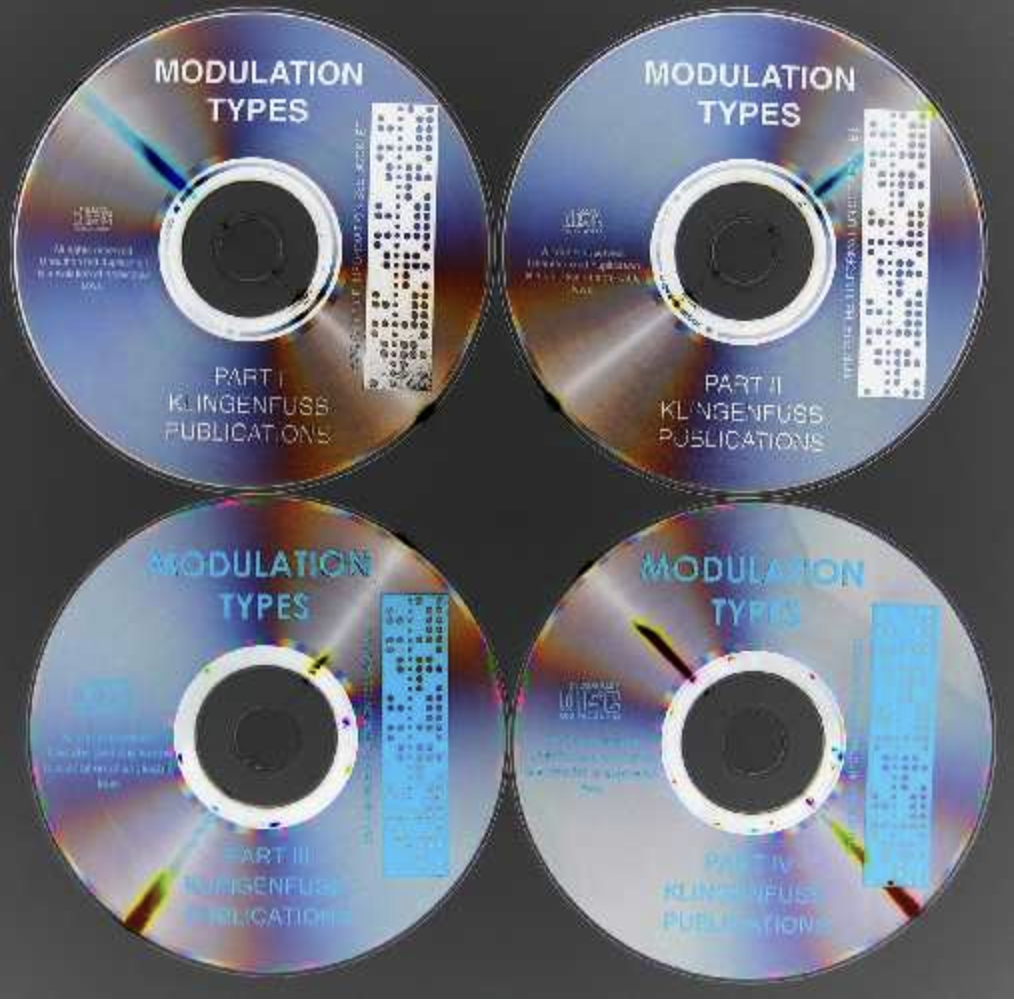
Klingenfuss Modulation Types 4-CD Set
Klingenfuss — Modulation Types (4-CD Set)
Jorge Klingenfuss is a legend in radio communications circles. His group has demonstrated singular excellence in providing unique aids and resources to the radio community for decades. The Klingenfuss.org site is worthy of your perusal. Among other finds, these two double CD sets contain examples of various radiocommunication systems recorded by a professional monitoring service in Europe. SpecSigs.com has been granted kind permission from Mr. Klingenfuss to use samples from this collection.
Klingenfuss.org

// More items being added — check back soon //

Collecting

Almost without fail, when someone views my radios, they'll ask: "Where did you find these?" My first radio — the Hallicrafters SX-110 — came via EstateSales.net, which led me to an estate sale in nearby North Augusta, SC. I didn't know what to expect to pay, as prices aren't listed. I didn't know if I was paying too much or getting a steal. But the radio was clean, plugged in, and playing a Bulldogs game. I switched it to CW, found Morse on the first try, and that was that. Here is my list of go-to resources, in order of success.

ARRL
I love Hamfests — mostly old geezers who all know each other really well, showing off their latest refurbishment efforts while trying to sell stuff they just don't have room for any longer. The ARRL site has a calendar you can search by location, date, state, zip code, and more. The smaller hamfests are the most fun — always good stories, brains to pick, and techniques to learn. They're hosted by local Amateur Radio clubs. The big one I go to is the Annual Stone Mountain Hamfest, held just outside of Atlanta.
ShopGoodwill.com
Who knew? ShopGoodwill.com is a surprisingly rich resource — free to register and a well-done website. Goodwill auctions rather than flat-sells most items — they're raising money for a worthy cause, so bid accordingly. Note that the auction clock runs on West Coast time, so pay attention. Radios tend to be quite heavy, so the built-in shipping calculator is useful. And there is a lot of stuff across all categories — be prepared to dig.
Facebook Marketplace
I've had very good success with Marketplace, consistently finding nice radios at affordable prices. I've driven all over Georgia and goodly portions of the Carolinas to pick up radios. Getting there is half the fun, and meeting the folks with the radios is the other half.
EstateSales.NET
If you've not done an estate sale, be aware that they're normally three days long and prices are cut on consecutive days — Day 1 is full price, Day 2 is 50%, and Day 3 is often 25%. Prices tend to be firm as tagged, so unless you enjoy arguing. If you see something you must have, go Day 1. They're trying to empty a home or business and don't want to haul what's left to Goodwill or the dumpster.
eBay
I've made a couple of good buys off eBay, but I find most prices are too dear — although this looks like the best place to try and land an R-390. Search for "vintage tube radio" and see what turns up. Set a saved search and let it come to you.
Yard Sales
Surprisingly, not the most lucrative — even though I live in a town with major intelligence and military facilities nearby. But on occasion a nugget of radio gold turns up. Worth a Saturday morning.
Schulman Auction
An indulgence I have not yet taken — but Schulman specializes in Ham Radio, Vintage Audio, and Antique Radios. This is where serious collectors go when serious equipment comes to market. The day I find an R-390 or a Collins S-Line in their catalog, the credit card comes out.
JF Radio Repair
Mr. Jay Forbes is a superior repairman for vintage tube radios. I have used his services for eight of my receivers. His rates are very reasonable for the quality of the work, and he has graciously offered to tutor me on repairs whenever our calendars align.
Randy Rago
Radio Restoration
When Randy Rago responded to one of my Facebook posts about repairs, I had no idea he was a celebrated restorer in vintage radio circles. The man is the radio whisperer — a true gentleman who has repaired three of my radios. When he’s not at his workbench, he is co-custodian of the excellent Asheville Radio Museum. Find him on Facebook.

The Collector

"An Analog Man
Caught in a Digital Age
Lost in the Ether..."

Forty-four years
in the shadows.

100Years of
Radio History
44Years USN
& IC SIGINT

Twenty years in the United States Navy. Twenty-four years in the Intelligence Community. A career spent listening for signals that mattered — Cold War intercepts, special signals, the quiet transmissions that shaped history before most people knew history was being shaped.

Retirement brought a different kind of listening. Vintage tube radios — the receivers that ordinary Americans gathered around while the world changed beneath them. A Zenith console in a Maine cottage the year of the Hurricane of '38. A Hallicrafters in a signals room the night Pearl Harbor changed everything. A Trans-Oceanic on a diplomat's desk during the Cuban Missile Crisis.

Each radio in this collection came with a story. Some I know. Some I'm still working out. All of them are worth hearing.

Feedback and Questions are always Welcomed

specsigsguy @ outlook.com

The Collector · On the Air

Whither Shortwave?

I started wearing cans in 1979, manning a bank of Collins R-390 receivers while the shortwave bands were absolutely bursting with signals from every country on earth. Two decades as a U.S. Navy Cryptologic Technician and 24 years as a Technical SIGINT leader in the Intelligence Community left me a lasting, rock-solid proponent of shortwave — not as mere nostalgia, but as a uniquely resilient tool for when everything else fails.


The Frequencies We Abandoned

Here is an uncomfortable fact: while U.S. shortwave capacity has steadily contracted, China has dramatically expanded its HF broadcasting presence, transmitting in dozens of languages on multiple high-power frequencies that now dominate stretches of the global spectrum once occupied by Western voices. Listeners around the world regularly encounter Chinese broadcasts filling spaces that Voice of America and Radio Free Europe used to hold. This is not an accident. It reflects strategic intent, sustained investment, and a clear-eyed understanding of what shortwave can do that no other medium can.

Shortwave signals cross borders, terrain, and political barriers without permission. They require no local infrastructure. They cannot be geofenced or throttled. And critically — for listeners in authoritarian environments — reception is anonymous. A radio can be built from wire and salvage. That combination of reach and untraceability is why Radio Free Europe was a lifeline behind the Iron Curtain, why Voice of America mattered, and why Radio Martí still matters today.


What I Learned from Helene

In September 2024, Hurricane Helene put theory to the test for me personally. We lost power for 13 days. Internet and cellular — dependent on fiber, towers, and grid power — were gone. Those of us with shortwave and amateur radio stayed connected: to the local community for fuel, water, and supplies; and to the outside world for news. Modern communications infrastructure is efficient. It is not always resilient. Shortwave is neither glamorous nor fast, but it works when the grid doesn't — and that reliability is irreplaceable.


An Untapped Market

There is also a commercial argument worth making. Vinyl record players are projected at roughly $1.25 billion in global market value for 2025. The broader retro audio market — turntables, cassette decks, reel-to-reel hardware — sits around $1.9 billion worldwide, and it is growing. Younger generations have demonstrated real appetite for analog equipment: the tactile weight of it, the ritual, the deliberate engagement it demands. A well-designed shortwave receiver with big knobs, a glowing dial, and compelling programming would find an audience. The FOMO potential of live, unfiltered signals from across the world — weather fax, maritime traffic, numbers stations, time signals — is genuinely underestimated.

The medium is not the problem. The programming vacuum is.


What Should Be Done

Reinvesting in shortwave is inexpensive relative to virtually any other communications infrastructure. Targeted grants or licensing incentives could encourage commercial broadcasters to simulcast existing programming on shortwave, quickly restoring domestic reach and international presence without building anything from scratch. Expanded foreign-language broadcasts would reinforce America's ability to deliver reliable information into environments where independent media are suppressed or absent.

Finally, 47 CFR § 73.702 — the FCC regulation that restricts U.S. shortwave broadcast licenses to foreign-only reception — should be revisited. That restriction prevents shortwave from serving domestic audiences, limits its utility in disaster scenarios, and made sense in a different era. Eliminating or modifying it would allow shortwave to function as the full-spectrum emergency and public communications tool it is capable of being.


The content and editorial direction of Voice of America are legitimate subjects for debate. The medium itself is not. Shortwave has been tested across a century of wars, disasters, occupations, and infrastructure failures. It has never stopped working.

We vacated those frequencies. Other voices filled them. We can — and should — do better.

— Spec Sigs Guy, retired U.S. Navy / IC SIGINT, Evans, Georgia